
30 Years of Panic and Agoraphobia — Former P2P student Lauri's Story of Finally Finding Her Way Out
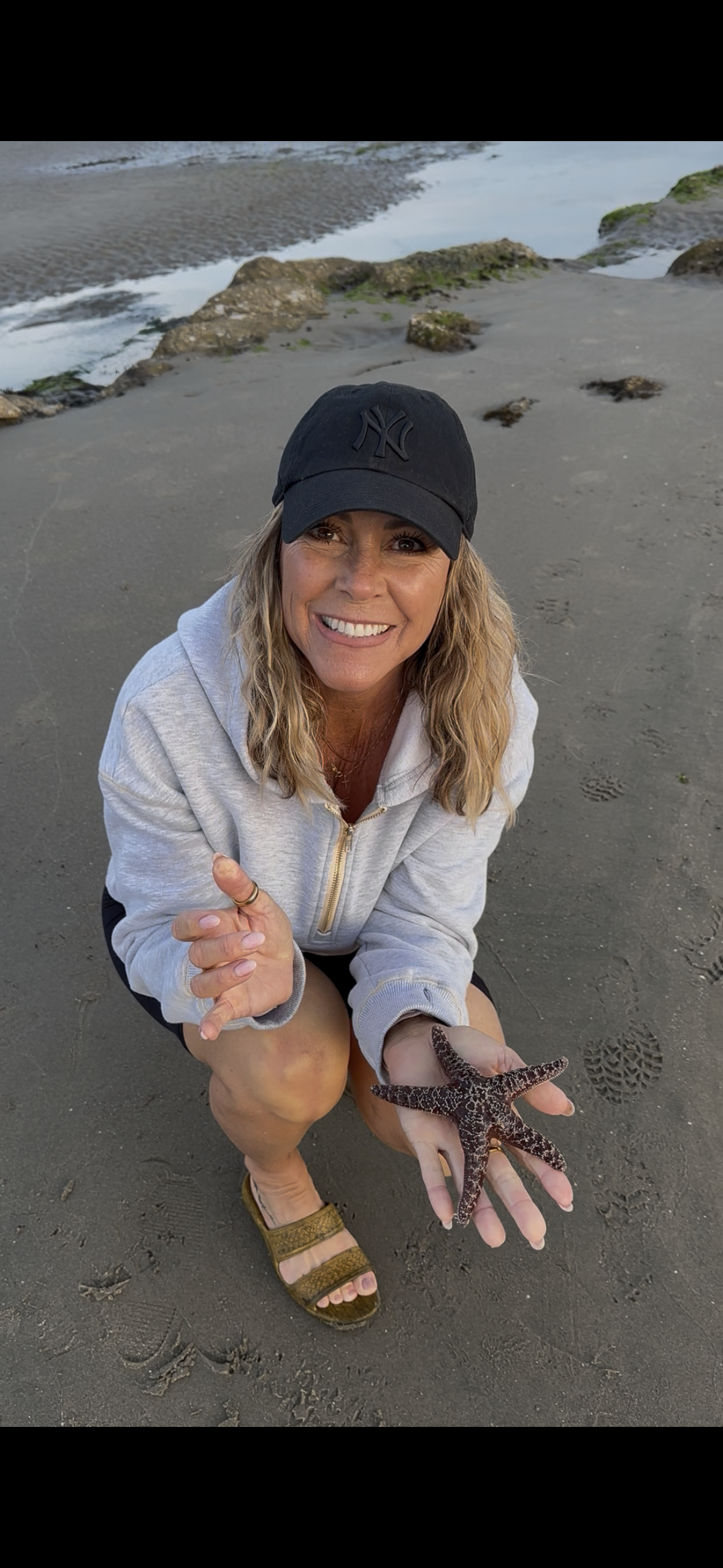
What does it look like to carry panic disorder and agoraphobia for 30 years without anyone really knowing?
I sat down with Lauri, a former Panic to Peace student and current community member, for one of the most honest conversations I've had on this podcast. Her story is one of shame, survival, and what happens when you finally decide you're done hiding. If you've ever felt like your world is shrinking and you don't know how to stop it — this one is for you.
It Started With a Panic Attack She Didn't Recognize
Lauri's first panic attack happened at a client dinner. She was eating calamari, feeling pressured to try it, and suddenly couldn't swallow. Her heart raced. She had tunnel vision. She excused herself, went to the bathroom, and stood there trying to figure out what was happening to her body. She now knows it was depersonalization. At the time, she just thought it was the scariest moment of her life.
She drove home an hour later and didn't think about it again — until a week or two after, when the same feeling hit her at the office and she had to run outside just to catch her breath.
For a few years, it stayed manageable. And then life got bigger, harder, and the panic got louder.
The Shame That Kept Her Stuck
When Lauri's twins were 18 months old, she left her corporate job to be home with her babies and started to feel what she thought was depression. Her doctor prescribed medication. The first few weeks made the anxiety worse — which is common — and she called her husband in a panic, telling him he needed to come home. He was frustrated. He didn't understand. And that moment, she says, started a shame cycle that kept her stuck for decades.
She was independent. She had been a single mom. She had traveled wherever she wanted and handled everything on her own. The idea that she now couldn't trust herself to be okay alone was completely foreign — and humiliating.
She started avoiding. First the road where she'd panicked on the way to therapy. Then the highway. Then anything that took her too far from home. And slowly, quietly, her world got smaller.
Hiding It From Everyone
For 20 years, Lauri worked alongside the same group of real estate agents. None of them knew.
She missed conferences. She turned down education she needed. She came up with thousands of excuses. She made her kids safe people — checking them out of school to ride with her to listings outside her comfort zone, keeping them home so she wouldn't have to go alone. She carried an emergency medication prescription in her purse for 26 years without ever taking it, just because having it there made her feel like she could survive.
She watched people drive past her on the freeway, checked their license plates from other states, and told herself something must be seriously wrong with her. Everyone else was just living. What was her problem?
The answer she kept finding didn't fit. Agoraphobia, according to everything she read, was a fear of wide open spaces. She could leave her house. She worked. She functioned. She just couldn't go far, couldn't be a passenger, couldn't cross certain invisible lines without her body sounding every alarm it had.
She felt like she didn't fit any category. Like she was just broken in a way nobody could name.
The Lowest Point
Lauri shared something in this episode that took real courage to say out loud.
There were moments during those 30 years where she thought, if a doctor told me they could cut off my finger and I'd never feel panic again, I would say take my arm. There were moments where she thought she couldn't keep living like this. Where she found herself hoping that if she got sick and it took her life, at least it wouldn't be her fault. At least her kids couldn't be mad at her for leaving.
She said it herself: she loved her life. She loved living. But she could not keep living like that.
I share this because I know there are people listening who have been in that exact place and have never heard anyone say it out loud. You are not alone in that. And Lauri's story is proof that it doesn't have to be the ending.
What Finally Changed
Lauri had looked into in-person programs. One was $8,000 plus travel. Another was $30,000 for six weeks of inpatient treatment with no phone and no access to work. Neither was feasible.
She had followed me on social media for a few years. She had even gotten on the Panic to Peace waitlist once before and backed out. But she kept watching, kept listening, and something about hearing someone who had actually been through panic and agoraphobia — not just studied it — made her think, what do I have to lose?
She joined my coaching community while waiting for Panic to Peace to start. And she says that from the moment she got there, for the first time in 30 years, she felt seen and heard.
Not broken. Not crazy. Just a person going through something that a lot of other people were going through too. Men and women, people from different countries, different backgrounds — all using the same words she had been using alone for three decades.
Her world started getting bigger from there.
The Three C's That Carried Her
Lauri talks about three things that have been at the center of her healing: compassion, capacity, and community.
Compassion came first. Learning to stop shaming herself for what she was experiencing, for the safety behaviors, for the years of avoidance, for needing help. Because you cannot shame yourself into healing. It doesn't work that way.
From the compassion, her capacity grew. Her willingness to try things — messy, imperfect, anxious things — got stronger. She started driving to the next exit. Then further. She started going to grocery stores in bigger towns and making an event of it, walking in alone, grabbing a coffee, texting the community a photo. Coming home with the windows down and the music up, feeling like she'd just done something enormous. Because she had.
And underneath all of it was community. Hearing someone in the group describe their world getting smaller and recognizing every single word. Watching someone go to a professional football game, have a massive panic attack, and come back to share it — and realizing, he survived. She can survive. We are all the same.
Where She Is Now
Lauri just got back from a five-day trip with her boyfriend. She got on a plane. She went on a boat. She woke up on the first morning with huge anxiety and went anyway.
She is in a relationship with someone who showed up to their first trip together with a cooler full of snacks and never once made her feel like a burden. She told her colleagues of 20 years the truth about what she had been going through. She is driving further than she has in years.
She still has work to do — she'll be the first to say it. But she is not the same person who used to check out her kids from school to sit in the passenger seat so she could drive to a listing. She is someone who looks around at things like grocery store sushi bars with the wonder of someone seeing the world for the first time.
Because in a lot of ways, she is.
What I Want You to Take From This
Thirty years. Five kids. A marriage. A career. A world that shrank and shrank and shrank — and then started to grow again.
If you are in the thick of it right now and it feels like too long, too far gone, too much to ever come back from — Lauri's story is your answer. It is never too late. The shame is not the truth. And healing doesn't happen in spite of the hard stuff. It happens right in the middle of it, one small step at a time.
You deserve a life that keeps getting bigger.
ready to stop doing it alone?
Inside my 10-week program, Panic to Peace, I’ll guide you through this work step by step and you’ll be surrounded by people who truly get it.
You don’t have to stay stuck. Healing is possible and it’s closer than you think.
Come hang out with me on Instagram → I'd love to connect with you!
