
Recovered & Rambling: Letting Go of Control, Ordering Groceries & Recovery Without the Force
Why do we think recovery has to be forced?
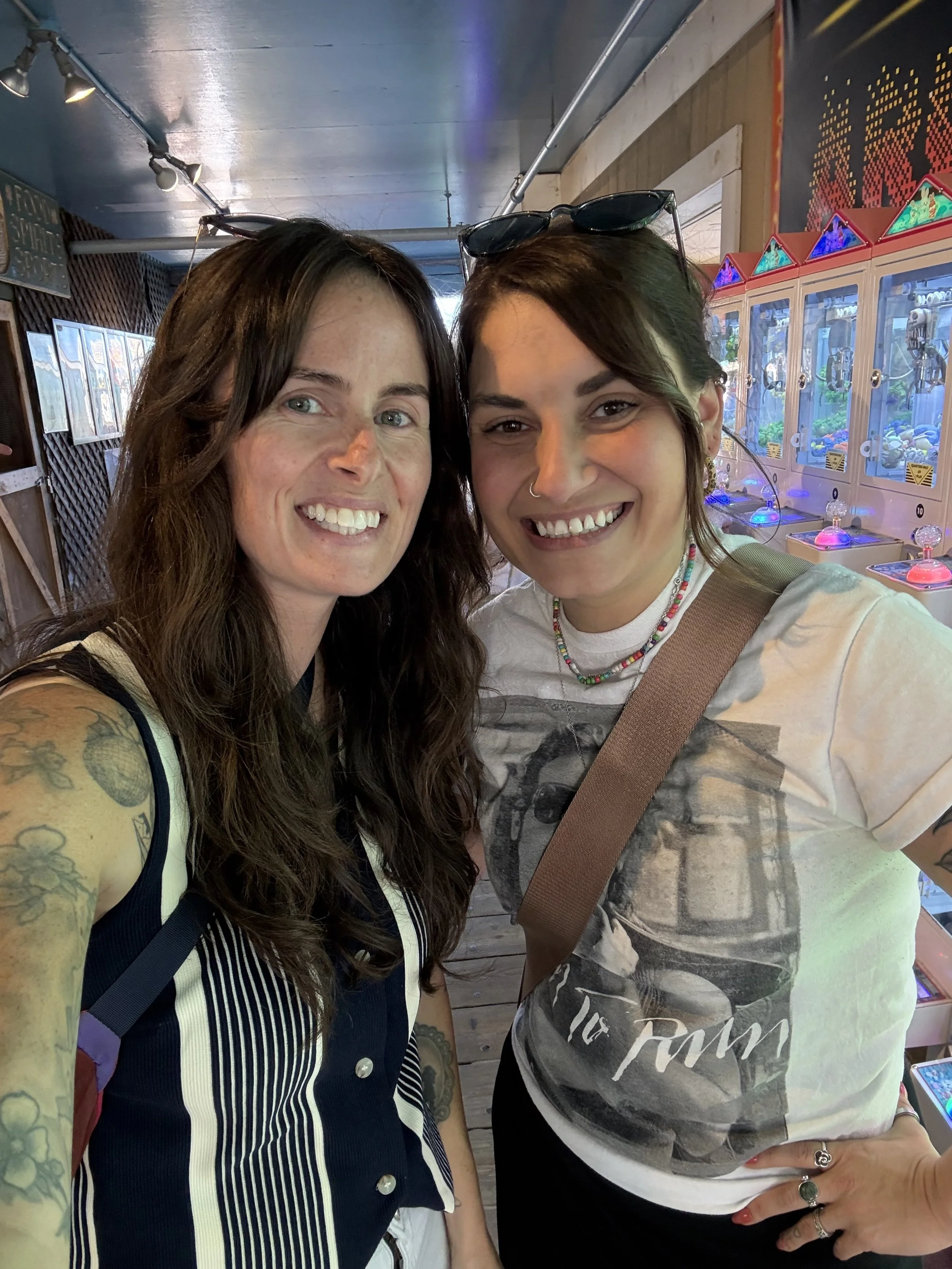
It's something I keep coming back to, and it came up again in my latest Recovered & Rambling with Brittany. We started the episode saying we had nothing to talk about, and 45 minutes later we were still going. Here's the heart of it, from baby sleep to Real Housewives.
Control backfires (even when you're a recovery coach)
Brittany just got back from a trip to Connecticut, and she barely planned anything. A few years ago she'd have had every hour mapped out. This time they picked where to eat and what to see, and the rest just happened. It was her most relaxing trip in a long time.
Meanwhile, I was up late the other night spiraling over my almost-four-month-old's sleep. How do I get him out of the swaddle? How do I fix his naps? What am I doing wrong? And I stopped myself, because I know this feeling. It's exactly what I did when I was struggling with panic. I was sure that if I could figure out the how and the why, I'd feel better.
That was never the answer. The answer was to stop trying to figure it out. (Meanwhile, our nanny put him down on the couch and he slept. I need the dark room, the sound machine, and the perfect swaddle. He needs a couch.)
The best sign you're healing isn't less anxiety
A big conversation in my coaching membership lately has been: how do you know you're actually recovering?
The best indicator of healing isn't how much anxiety or panic you're feeling. It's how much more willing you are to do the things you want and need to do, with the anxiety along for the ride. Are you leaving the safety objects at home? Are you not calling your safe person every time? Are you going places you used to avoid?
That willingness matters way more than whether you had a rough anxiety day. Recovery doesn't require you to feel less anxiety to be healing your relationship with it. If your willingness is growing, you're doing so much better than you think.
"Back to square one" isn't real
Brittany shared that she recently panicked that she had "relapsed" and was right back at the beginning, even after working in my business for over a year. That's how sneaky our brains are. Feeling it come back, and then deciding that means you're worse, is what really knocks us down, not the anxiety itself.
Someone once told me my brain was really creative. I didn't know how to take that at first. But it's true. Your brain is just being creative, and the trick is not following every story it comes up with.
Ordering your groceries is not avoidance
This is the one I want you to hear most. I used to be the person who went to the grocery store and Target without thinking about it. Now, postpartum and in survival mode, I'm Instacarting and DoorDashing everything, and I get it in a way I never did when I was teaching this.
There's a lot of pressure in recovery to make yourself do everything, to prove you can, to push yourself through exposures. But force backfires, especially when your nervous system is already overwhelmed. Taking care of yourself is not the easy way out. It's actually one of the hardest things for us to do.
Brittany's story is a good example. When we started working together, I asked where she liked to drive. Her first answer was nowhere. Then she remembered she loved taking her daughter to the park. So that's where she started, and soon she was going every week, without forcing herself to do something she didn't want to do.
Does that mean never leaving the house again? No. It means don't torture yourself. Start where you're willing.
Mindfulness doesn't have to be a breathing exercise
Brittany has been coloring a fabric-marker blanket with her daughter every night, and she said it's become a soothing little ritual that quiets her brain and helps them connect. That's mindfulness. For me it's walking outside and stopping to take a picture of a giant butterfly I'd have missed if I were on my phone. Anything that gets you more present counts.
And yes, we talked about Real Housewives
Because sometimes the best thing you can do for your nervous system is turn your brain off and watch grown women flip tables. We love a little escape, and I promise it's part of the recovery plan.
ready to stop doing it alone?
Inside my 10-week program, Panic to Peace, I’ll guide you through this work step by step and you’ll be surrounded by people who truly get it.
You don’t have to stay stuck. Healing is possible and it’s closer than you think.
Come hang out with me on Instagram → I'd love to connect with you!
